Study at Saarland University
Saarbr眉cken, Germany
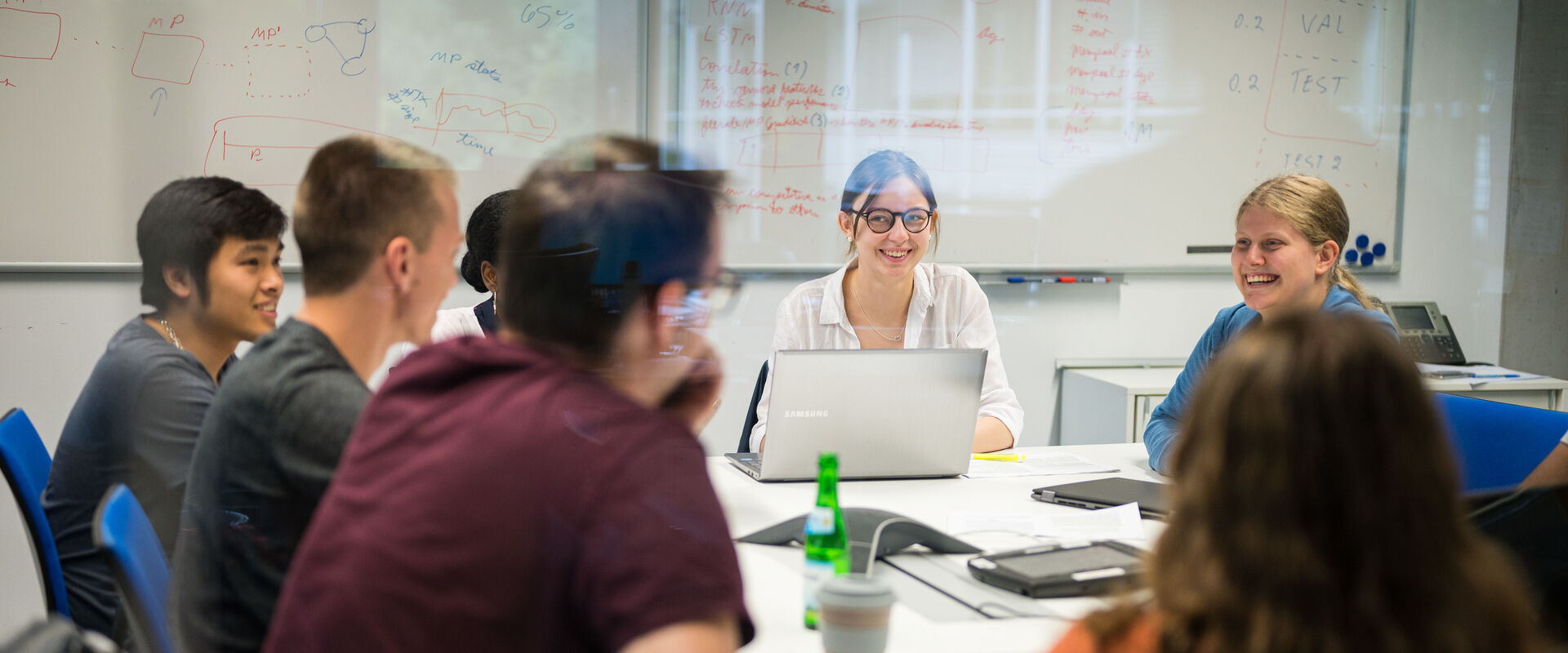
Photo by Saarland University
| Programme details | |
|---|---|
| Degree: | Master of Science (MSc) |
| Disciplines: |
Mathematics
Computer Science |
| Study modes: | full-time, part-time |
| Delivery modes: | on-campus |
| University website: | Visual Computing |
Request information from Saarland University
Visual perception is responsible for most of our impressions about the world around us.
This is why computers are being increasingly used to process digital images and visual simulations. Areas in which these applications are already well established include medical technology, the automotive industry, multimedia systems and industrial quality control. Creating and analysing digital images requires specialist knowledge.
The master's degree programme 'Visual Computing' at Saarland University is therefore a joint undertaking involving the university departments of Informatics and Computer Science, Mathematics and Systems Engineering, the medical technology division at the Fraunhofer Institute for Biomedical Engineering and the Max Planck Institute for Informatics. The programme also maintains close cooperative ties with the Max Planck Institute for Software Systems, the German Research Center for Artificial Intelligence and the Fraunhofer Institute for Nondestructive Testing, which is also located on the Saarbrücken campus.
The M.Sc. programme 'Visual Computing' teaches students the fundamental principles, processes and applications of computer-assisted processing of visual information. Students will become acquainted with the theory and practice of image analysis and pattern recognition.
They learn how images are generated, processed and analysed from a technical point of view, and how to create static and animated images that are the best possible representation of reality. The requisite theoretical and practical knowledge is taught in courses and modules that cover image generation and the underlying geometrical principles, image synthesis and image analysis and related areas. Students on the master's programme also acquire important fundamental knowledge in the disciplines of mathematics, informatics, physics and mechatronics.
English is the language of instruction and examination. Particularly talented students are eligible for scholarships from the International Max Planck Research School for Computer Science. Graduates from the Saarbrücken master's programme not only have an excellent foundation from which to undertake subsequent doctoral research work, they also have excellent career prospects in a wide range of fields, including the optical industry, the medical technology sector, bioinformatics, the automotive industry, telecommunications, industrial quality control, multimedia, media design and robotics.
The master's programme can be studied either part time or full time. Students must study full time when working on their master's thesis in the final semester. More information is available on the Part-time studies website (available in German only).
English language courses and a course teaching German as a foreign language are offered by the Max Planck Institute for Informatics (MPII). Additional language courses are offered by the International Office and the Language Centre at Saarland University. Students can earn up to 6 credits towards their master's degree from language courses.


Visit the website of Saarland University to find out how to apply and start your study-abroad adventure in Germany! 🙌