Applying for a Bachelor’s degree in the Netherlands (2026)
Open to international minds
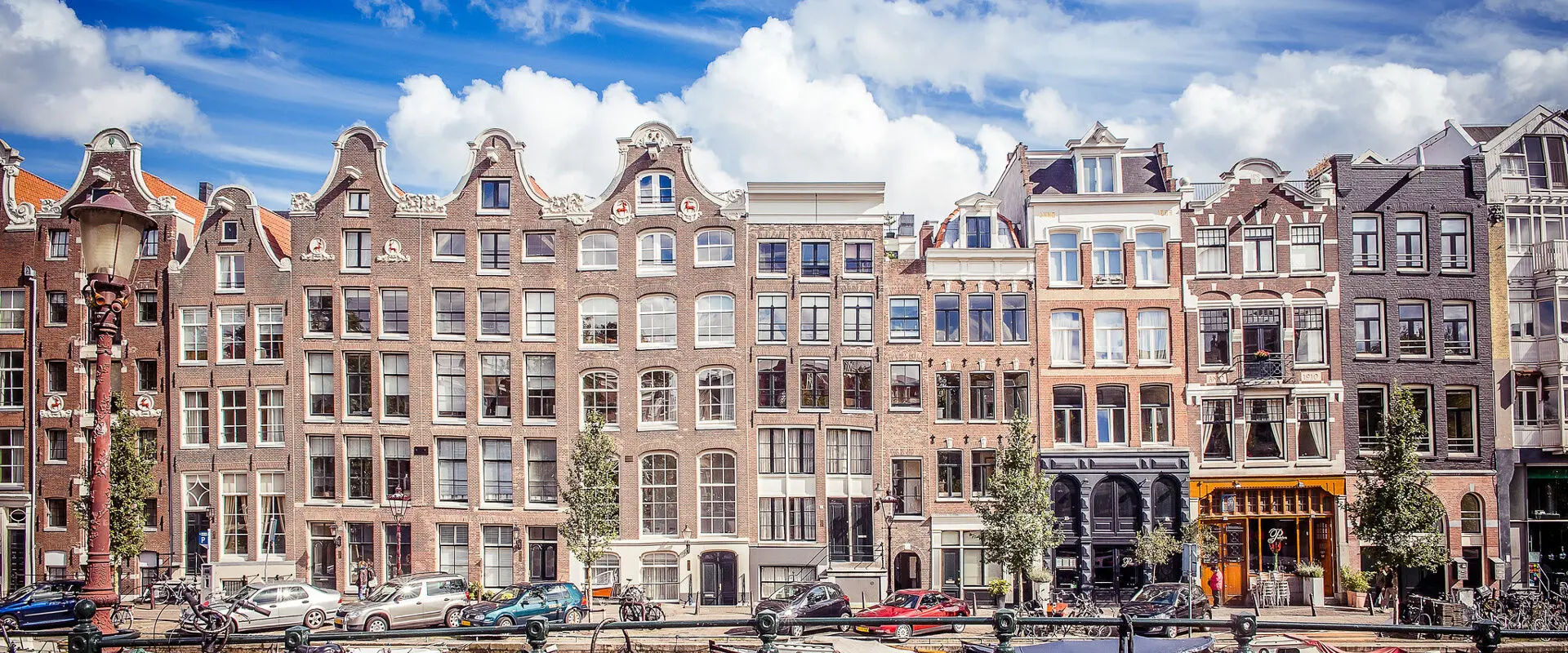
by Andr辿s Nieto Porras, , modified
 |
|
|---|---|
| 45 | universities offer Bachelors in the Netherlands in English |
| 467 | Bachelors are available |
The Netherlands is one of Europe’s most popular destinations for international students starting their Bachelor’s degrees, and for good reason!
Dutch universities offer hundreds of English-taught programmes across all disciplines with an interactive teaching style that encourages independent thinking.
On top of that, the Netherlands is safe, well-connected, and full of student cities like Amsterdam, Delft, Utrecht, and Groningen. Even if you don’t speak Dutch, you’ll find it easy to get by thanks to its international environment, where it’s easy to connect with students from all over the world.
From Business to Engineering, there is a large variety of Bachelors in the Netherlands that are completely taught in English.
Understanding the two different types of tuition fees in the Netherlands is key when planning your Bachelor’s degree.
Statutory tuition fees are €2,601 in 2025 and apply if you meet certain . This fee is subsidised by the Dutch government and updated annually. You may qualify for statutory fees if:
For everyone else, institutional tuition fees apply. These are set by individual universities and are usually higher. So in general non-EU/EEA students can expect to pay at public universities between €10,000 and €13,000, with some universities and business schools charging up to €18,000.
Medicine programmes and degrees at private universities tend to be more expensive, often costing up to €25,000 per year regardless of your nationality.
The application process for a Bachelor in the Netherlands varies depending if it’s a public or private institution.
Most public universities use , the centralised application system for Dutch higher education. However, there are exceptions so if you’re uncertain it’s a good idea to contact the admissions office for guidance.
Meanwhile, private institutions like Wittenborg UAS or SRH Haarlem have their own platforms.
Studielink does not charge an application fee, but when applying to other universities outside this system you can expect to pay between €100 and €200.
Most universities will ask for the following documents:
You may also be asked to take an entrance exam or attend an interview, depending on the programme, but always check the specific requirements of the university and programme you’re applying to.
If you’re applying through Studielink, there are two key deadlines to keep in mind. The first is 15 January, which applies to numerus fixus programmes (= these are selective programmes with a limited number of spots, such as Medicine, Psychology, or International Business at certain universities).
For most other Bachelors at public universities, the standard application deadline is 1 May. You may still be able to apply after this date, but submitting your application beforehand ensures you’ll be considered for admission and, in some cases, for housing guarantee or visa support.
Meanwhile, private universities typically offer much more flexibility when it comes to application timelines. Many operate on a rolling admissions basis, have multiple start dates throughout the year or just accept late applications. For example, SRH Haarlem University of Applied Sciences offer two intakes per year, giving you more freedom to choose when to begin your studies.
Many international students in the Netherlands receive financial support through scholarships. These may come from the Dutch government or directly from universities, which often offer merit-based for outstanding applicants. The availability, amount, and eligibility criteria vary, so it’s important to check offical sources such as .
If you’re not able to get a scholarship, working part-time during your studies is another way to help manage costs. EU/EEA students are allowed to work without restrictions. Non-EU/EEA students can also work, but they’ll need a work permit (TWV) arranged by their employer. With this permit, you’re allowed to work up to 16 hours per week during the academic year or full-time in June, July, and August.
If you’re a citizen of the EU, EEA, or Switzerland, you don’t need a student visa to study in the Netherlands. However, since you will stay longer than 3 months you’ll need to meet certain registration and residence requirements.
Students from a number of countries can enter the Netherlands without a residence permit, but must apply for one after arrival. These include:
Students from other countries will need a provisional residence permit, known as the MVV (machtiging tot voorlopig verblijf), before entering the Netherlands.
If you need a residence permit (and possibly an MVV), your university will usually apply for it on your behalf as your official sponsor. The Dutch Immigration and Naturalisation Service () provides country-specific guidance.
To be eligible, you’ll need to demonstrate that you can financially support yourself. For 2025, this means showing proof of financial means of €1,094.12 per month, or €13,129.44 for a full year. Many universities round this up slightly to account for bank fees, often listing €13,200 (€1,100 × 12 months).
Finding student accommodation in the Netherlands is challenging, so it’s important to start your housing search as early as possible and not to underestimate the difficulty. Rent prices can be high so, especially at the start of your search, expect to pay more before you find more affordable options.
Universities are well aware of the housing shortage and typically offer support once you’ve accepted an offer for your Bachelor’s programme. And some even guarantee accomodation during the first year.
Getting to the Netherlands is straightforward thanks to its excellent transport connections. Most international students arrive via Amsterdam Schiphol Airport, one of Europe’s busiest and best-connected airports, with direct flights from all over the world. From Schiphol, you can easily reach your university city by train, bus, or taxi.
If you’re travelling from elsewhere in Europe, consider taking the train. The Netherlands is well linked by high-speed rail to cities like Brussels, Amsterdam, Paris, and Berlin.
Once you arrive, grab a bike and join the locals! Cycling is not just the easiest way to get around, it’s a true Dutch experience that will help you move around your new city like a local in no time.
Most Bachelors in the Netherlands usually take 3 years to complete, with some programmes at private institutions that last 4 years.
Bachelor���s tuition fees in the Netherlands are ���2,601 per year for EU/EEA students, while non-EU students typically pay between ���10,000 and ���18,000 annually, with private institutions often charging more regardless of nationality.
Ready to study in the Netherlands?


